Hardware logic
One handle. Two jobs.
Tilt-and-turn is not a style. It describes the two ways in which you can open the window. On this page, we will explain how tilt-and-turn windows work and the advantages they have over other types.
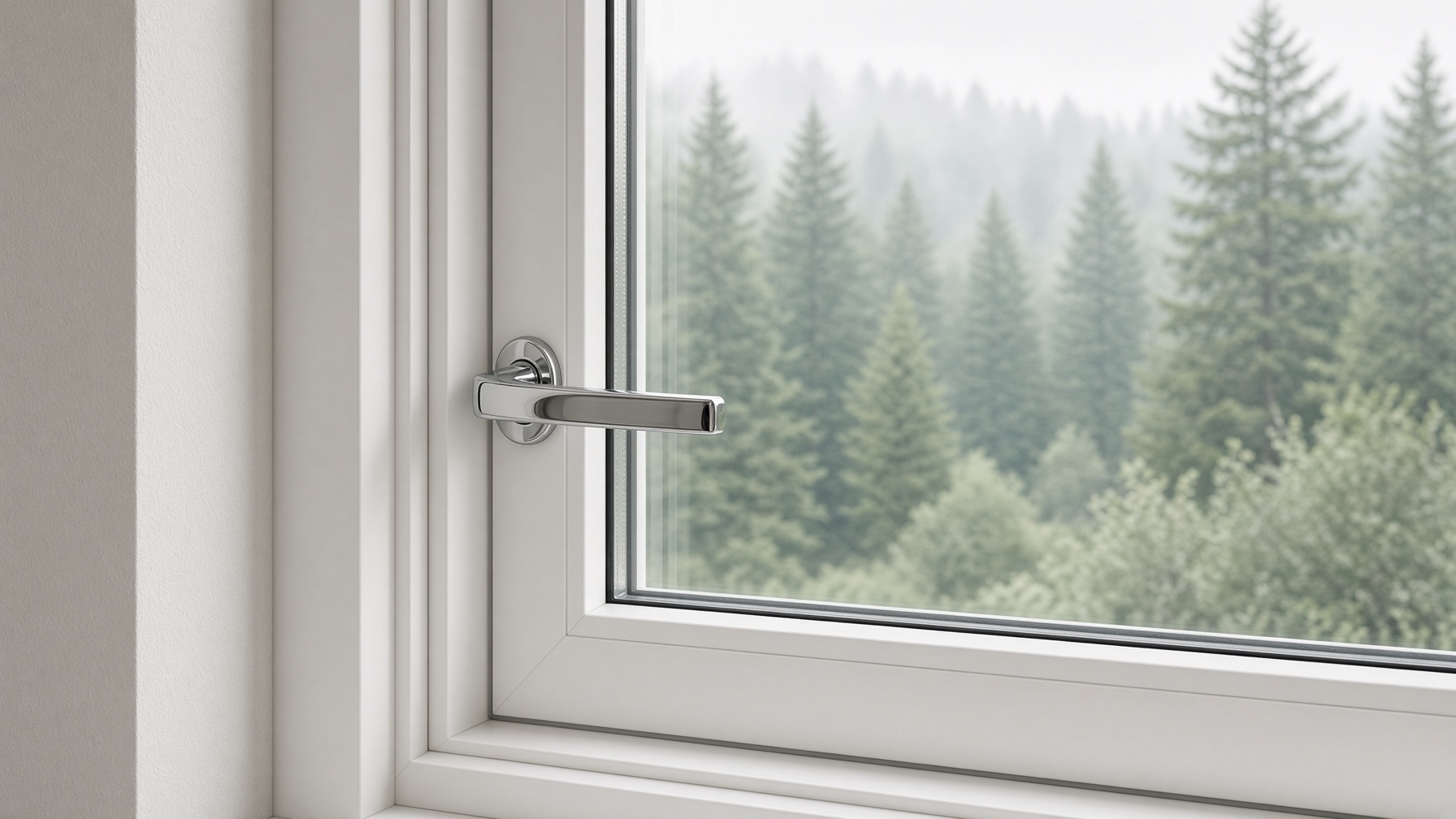
Dual action
The handle decides the weather
One lever. Close for a compression seal. Tilt for a locked slot of air. Turn the sash into the room when you need the opening.
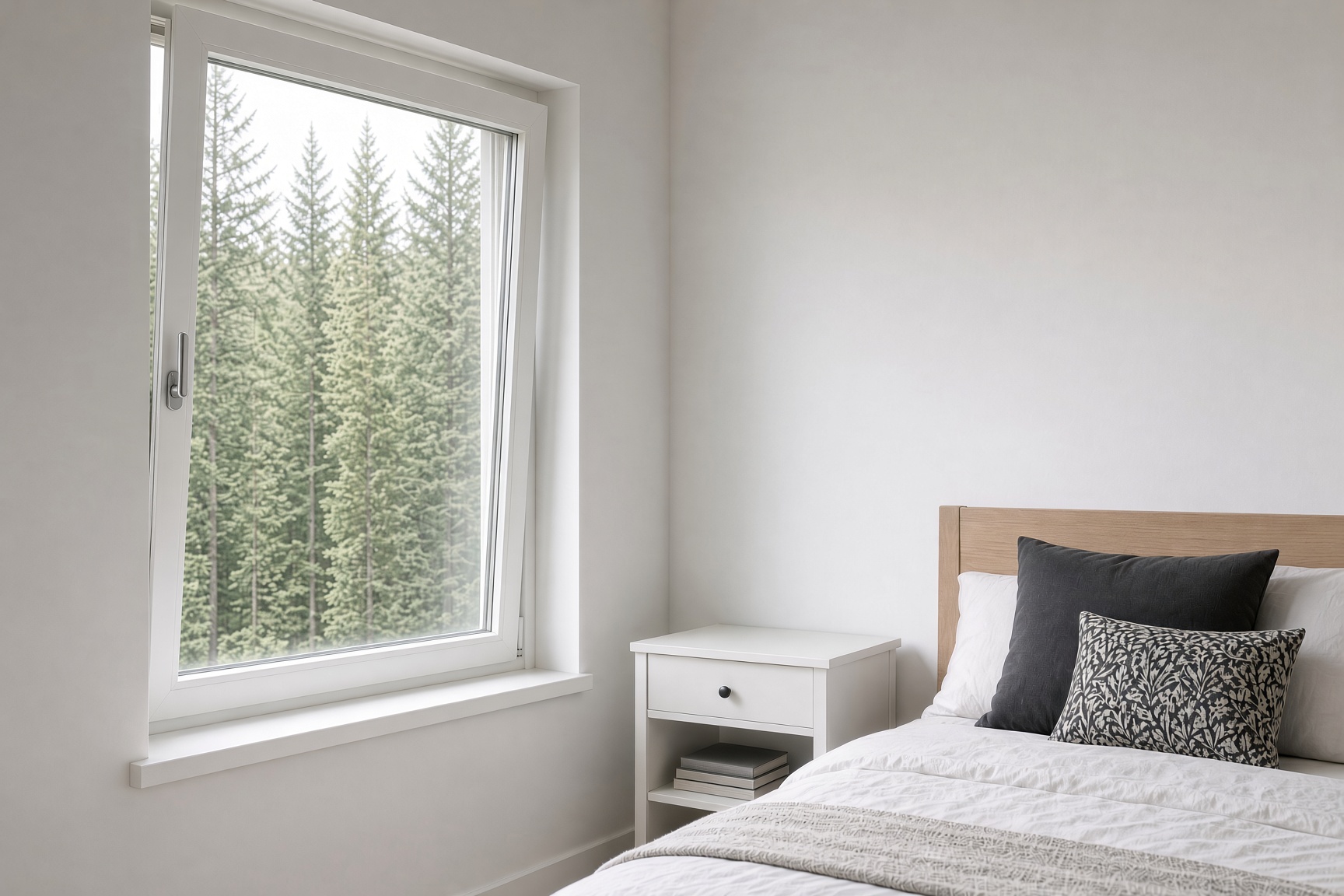
In the room
What actually changes once it is installed
Night air without a gaping hole
Tilt parks the sash a few inches at the top. Warm air leaves high; the bottom of the sash stays locked. Rain is less likely to blow in than with a double-hung left cracked overnight.
Both faces of the glass from the floor
Turn swings the sash fully into the room. You wash the exterior pane standing inside — no ladder on upper stories, no leaning over a casement that opens out.
A quieter closed position
Dual seals around the perimeter and a deeper chambered frame cut street noise more than a typical single-weatherstrip hung or slider. Glass package still does most of the work.
Bolts around the sash, not one latch
European hardware throws multiple locking points as the window grows. A meeting-rail latch on a hung unit is one contact. Tilt-turn is a ring of them.
Compression instead of a sliding track
The sash pulls into the frame and compresses gaskets. Sliders and hung sashes ride in tracks that collect dirt and leak air at the meeting rail.
Larger operable lights that still seal
Because the hardware supports the sash at several points, a single operable unit can be bigger than a typical hung sash without the same sag or draft at the lock.
Side by side
Next to the windows most American houses already have
Generic types only — a well-made hung window can outperform a poorly installed tilt-turn. This table describes typical motions and hardware, not a named brand.
| Tilt-turn | Double-hung | Casement | |
|---|---|---|---|
| Ventilation | Tilt for trickle air; turn for a full opening | Sash slides up; rain and insects share the gap | Opens out; hard to leave in a storm |
| Cleaning | Turn inward; both panes from the room | Tilt-in sashes help; still a fiddle on tall units | Exterior glass from outside or a washer |
| Locking | Perimeter bolts; count rises with size | Usually one latch at the meeting rail | Multipoint on better units; still a single swing |
| Night use | Tilt is a locked, rain-aware vent | Cracked sash is an open hole | Often left shut; opening out is exposed |
| Screen | Interior screen; sash tilts/turns in front of it | Interior or half-screen common | Interior screen; sash swings into it |
Questions
Before you specify
A casement only swings. Tilt-turn adds a second, locked venting position and usually swings inward, so you clean the exterior from the room. Casements that open out still need exterior access for the outer pane.
If the motion fits the opening, we will spec the profile.
Streamline 60 or 76, glass package, and hardware — after we see the wall. Patio doors stay in the catalog for the spans tilt-turn should not cover.